Acupuncture
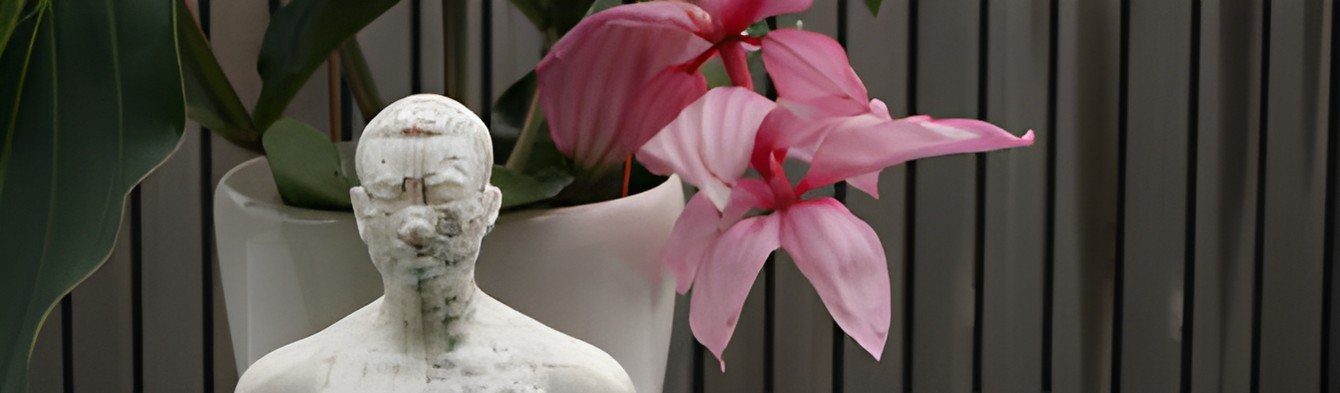
About acupuncture
Acupuncture is part of Traditional Chinese Medicine (TCM), a complete medical system that has been practised for more than 2,000 years. The Chinese view does not put the disease at the centre, but the person with the complaint, in his or her own surroundings. By now, a great deal of scientific research has been done into how acupuncture works and what its effects are.
In Chinese philosophy everything consists of the interplay of two forces, Yin and Yang. Health depends on a good balance between them. When that balance is disturbed, complaints can arise.
Basic principle
The basic principle of acupuncture is the circulation of life energy, Qi, which flows through the body along a system of channels (meridians). Fine needles are inserted at precisely defined points to influence that flow and release blockages.
Understanding what lies behind your complaint also lets you contribute to your own recovery, for example by adjusting your diet or lifestyle.
What it is used for
Acupuncture is best known for treating pain. Its effect is best researched for chronic back, neck and shoulder pain, knee osteoarthritis, and headache and migraine. In our practice we also treat many other complaints, often in combination with physiotherapy.
Complaints for which the effect of acupuncture has been researched best:
- Chronic back and neck pain
- Shoulder complaints
- Knee osteoarthritis
- Headache and migraine
- Radiating leg pain from a disc herniation
- Nausea after surgery or during chemotherapy
People also come to us with, among others:
- Chronic pain
- Sports injuries and tendon complaints
- Menstrual and menopausal complaints
- Fertility and IVF
- Inducing labour
- Sleep problems
- Stress and tension
- Fatigue
- Digestive complaints
- Support during cancer treatment
At the intake we discuss honestly what you can expect from acupuncture for your complaint, and what research says about it.
See also our article Acupuncture for back, neck, shoulder and joint pain: what does the research say?
Treatment
Most people do not find the needles unpleasant. You feel a small prick. At the right point the needle often gives a tingling sensation. Depending on the complaint, the needles stay in for 15 to 30 minutes.
The first session starts with an intake interview. How often you come depends on your complaint and your condition, and we decide this together. A session takes about 60 minutes.
Combined with physiotherapy
Jorg Nienhaus is both a physiotherapist and an acupuncturist, so for movement problems we often combine the two in one session. We only do this if you want to. Read more under physiotherapy.
Fees and insurance
A session costs € 80. You do not need a referral from your GP. Many Dutch health insurers reimburse acupuncture fully or partly from supplementary insurance, without affecting your deductible. See fees and insurance.
Would you like an appointment? Use the .